 United Kingdom
 China
China Hong Kong SAR
 India
India Indonesia
 Japan
Japan Malaysia
 Middle East
 Singapore
 Taiwan
 Turkey
Buying a property in London from Thailand involves planning how to convert Thai Baht into pounds and transfer them to the UK. For many Thai buyers, this means arranging a large overseas bank transfer for a deposit or purchase. Understanding this process in advance can help avoid delays, unexpected fees and problems with documentation.
In this guide, we explain how to transfer money from Thailand to the UK for property. It also includes the role of Thai banks, foreign exchange documentation and the costs to watch.
Can you transfer money from Thailand to the UK to buy property?
Yes. Thai residents can transfer money overseas for permitted purposes: this includes purchasing property abroad. The Bank of Thailand has relaxed its foreign exchange rules in recent years.
Your bank will still need to know the purpose of the transfer and may ask for supporting documents. The bank may also have its own transaction limits. This may be particularly applicable to transfers made through online banking.
What documents do you need to transfer money?

- Your passport or other identification.
- Details of the UK recipient account.
- The reason for the transfer.
- Property purchase documents or a sale and purchase agreement.
- A solicitor or conveyancer’s payment details.
- Evidence showing the source of your funds.
The Bank of Thailand states that commercial banks and financial institutions must request supporting documents for foreign exchange transactions equivalent to USD 200,000 or more. This is exempt for investors who have already completed the relevant bank’s Know Your Business process. The bank will also provide evidence of the foreign exchange transaction after it has been completed.
Understand the FET form requirement
Any transfer of Baht converted into foreign currency and sent abroad above a certain threshold needs to be reported to the Bank of Thailand. This is done through the Bank of Thailand FET form (Foreign Exchange Transaction form).
- The FET form is issued automatically by your bank once a transfer exceeds USD 50,000 or equivalent.
- This form confirms that your money left Thailand through legal, traceable banking channels.
- Ensure you keep a copy safe with you. UK solicitors and mortgage providers can ask for proof of source of funds. The FET form is often the key document they need.
Are there daily or transaction limits?
There is no single daily limit that applies to every Thai bank and every customer. Banks usually apply limits on how much you can send abroad in a single transaction or within a day. These limits will vary based on the bank and account type.
Before you plan the transfer, remember to:
- Confirm your bank’s daily outward transfer limit.
- Enquire whether large property-related transfers need extra approvals.
- Confirm if any transactions need supporting documents.
- Plan transfers in advance if your deposit is large. Some banks require multiple transactions spread across several days.
- Call your bank ahead of time to avoid last-minute surprises.
Avoid high foreign exchange (FX) conversion spreads
When sending Baht to GBP for London property deposit payments, the exchange rate you receive matters as much as the transfer itself. Thai banks often apply a wider margin on the exchange rate than specialist currency providers. This margin, known as the spread, can quietly reduce the amount that actually reaches the UK.
- Before transferring, compare the exchange rate offered by your bank against the mid-market rate.
- Ask if a fixed-rate or forward contract is available (if you are transferring in stages).
- Even a small difference in spread can mean thousands of Baht lost on a large property transfer. It is worth checking rates on the day of transfer rather than assuming they are fixed.
The right transfer method
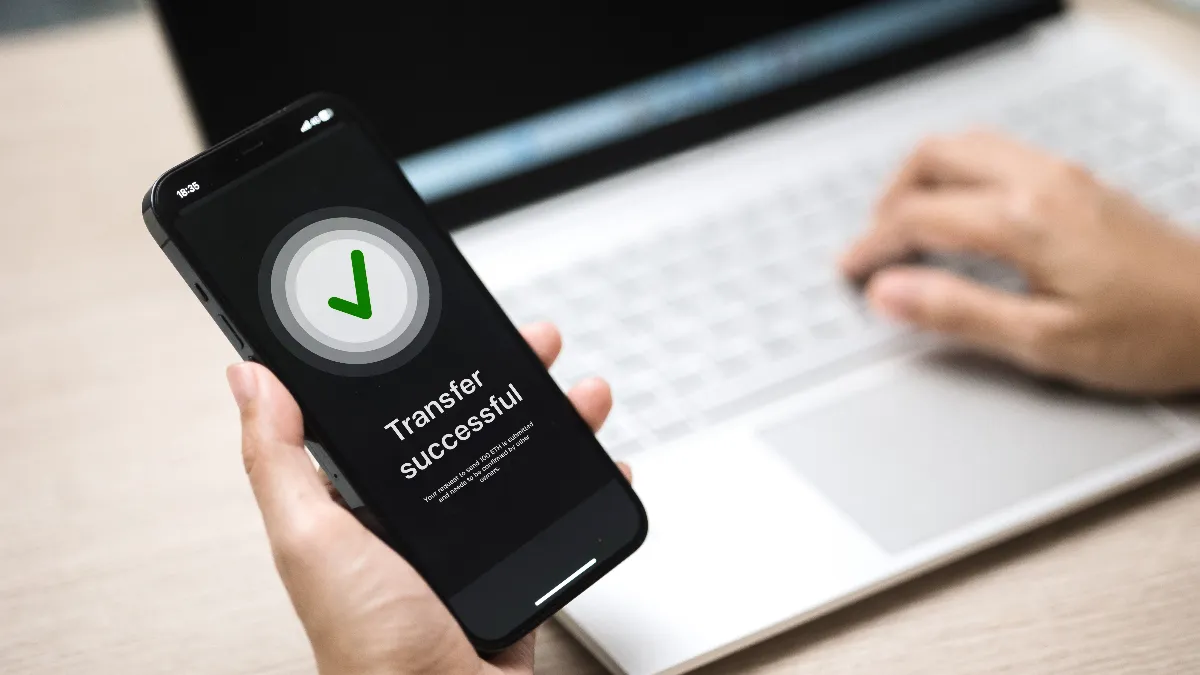
As an overseas investor in London, you typically will have two options for moving funds from Thailand to the UK:
Direct bank wire transfer
- Sent through your Thai bank to a UK bank account.
- This is straightforward, well understood by solicitors. Can come with a wider exchange rate spread and fixed transfer fees.
Specialist currency transfer service
- Often used for larger amounts.
- These services can offer better rates than a standard bank transfer.
- Your bank will still issue the FET form once the Baht is converted and sent.
Time your transfer around your deposit deadline
UK property deposits usually come with a set completion date. Since international transfers can take one to five working days depending on the bank and destination, it is best to start the transfer process at least a week before the deposit’s due.
Confirm with your bank how long the FET form and compliance checks will take.
Keep your solicitor updated once funds are sent. They can track the incoming payment.
A simple checklist before you transfer money
- Ensure your Thai bank can process the required amount.
- You are aware of the bank's transaction or online transfer limits.
- You have the required identification and property documents in place.
- Your source of funds documentation is ready.
- You understand the GBP/THB exchange rate being offered.
- You know the total transfer and intermediary bank fees.
- You have confirmed exactly how much GBP needs to arrive.
- You have cross-checked the UK recipient's bank details with your solicitor.
- Ensure you receive and keep evidence of the foreign exchange transaction.
Get support with the transfer
When moving money for a UK property, it is important to get the documentation, timing and exchange rate right. For guidance on the full buying journey, our London property buying advisory services team can help plan each step.
Benham and Reeves Thailand will also help you plan how your transfer fits into the wider purchase timeline. If you have questions about your specific situation, speak with our Thai team - we are happy to guide you through the process.